
As part of our 10th anniversary celebration, the Rebus team reflected on what first drew us to open and our "why" in doing open work. Learn more about our origin stories below, along with some of our Favourite Open Things!
Apurva Ashok, Executive Director

The seeds of open were sown during my post-graduate degree where I learned about how reading and annotation can be a social activity. I was fortunate to follow the footsteps of other graduates and complete a co-op placement at Rebus, where I was introduced to everything from open licenses, open publishing process, open technology to open values, open philosophy, and open praxis. Ultimately, I walked away with the deep understanding that education is a fundamental human right that holds the power to transform us as individuals and a society, and "open" is a means to ensuring that everyone has access to meaningful learning opportunities.
I stay in this field for similar reasons: learning and communicating with each other is how we evolve, grow, and thrive. Through my work, I can help others around me reconnect with purpose and joy. With my team, we nurture communities to leverage education as a catalyst for positive change. And through our collective work as a field, we find our way towards a liberatory future where lifelong learning is valued as a public good. How wonderful might it be that we get to experience that future sooner!
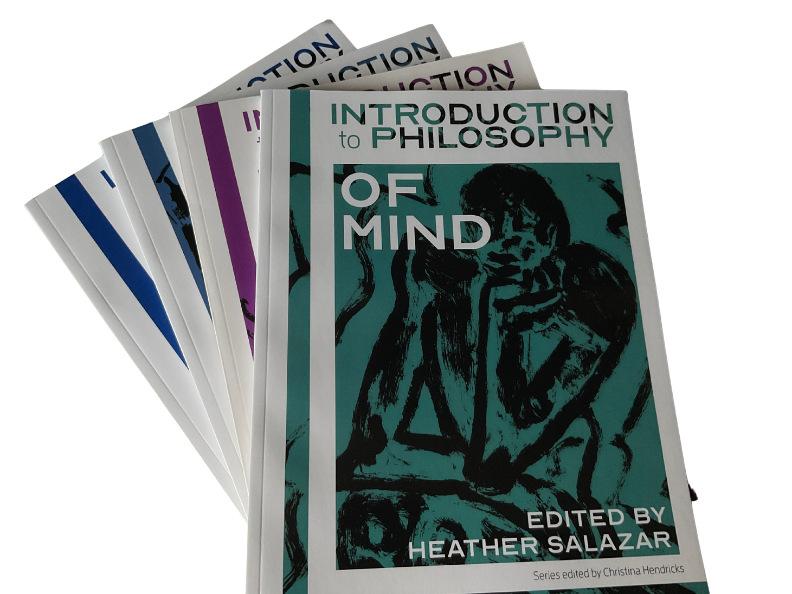
The Introduction to Philosophy Series was one of the first projects I worked on, starting in 2017, and is one I want to highlight as it embodies open in so many ways: it started as a conversation between Christina Hendricks and Hugh McGuire at a conference, and has grown into a 9-book series, with over 80 collaborators from all over the world. With 5 books published and 4 still in the works nearly 10 years later, this project shows us that open works at the pace of the people. Several of the books in the series have been adopted many times over in formal Philosophy courses, and been in use as general reading for interested learners. At a time when the Humanities feel more important than ever, it excites me to see that there is still a huge collection of free resources on Philosophy that can educate us on things like the meaning and utility of life, the mind, and more. This series features a distinct harmony of academic voices: thanks to the work of book and series editors, the books are cohesive whilst individual chapters stay true to the authors. In true collaborative fashion, the cover art for the series was drawn by one editor and designed by another open community member. The Introduction to Philosophy Series is a testament to the power of open, collaborative publishing!
Amber Hoye, Director of Programs
I was drawn to open because of one core concept: we can retain our copyright while still choosing to be generous. I love that we can empower creators through open licensing and co-create together through open pedagogy. It is deeply inspiring to be able to say, "Yes, please use my work." You don't have to ask me for permission or worry you'll get in trouble; please take it and build something entirely new.
One of my favourite openly licensed projects is The 3D Heart Library, which I first learned about at OEGlobal23 in Edmonton, Alberta. The project offers a tangible, interactive way for patients, families, and doctors to view and better understand congenital heart defects (CHD). It's a great reminder that all kinds of things can be openly licensed, including 3D models!

Kaitlin Schilling, Programs & Community Manager
I love the idea of sharing resources and knowledge with one another, and open licensing provides such a great opportunity for that. My "why" in open is to build genuine community, disrupt traditional barriers, and nurture relationships that transform open education from a concept into real, systemic change for learners everywhere.
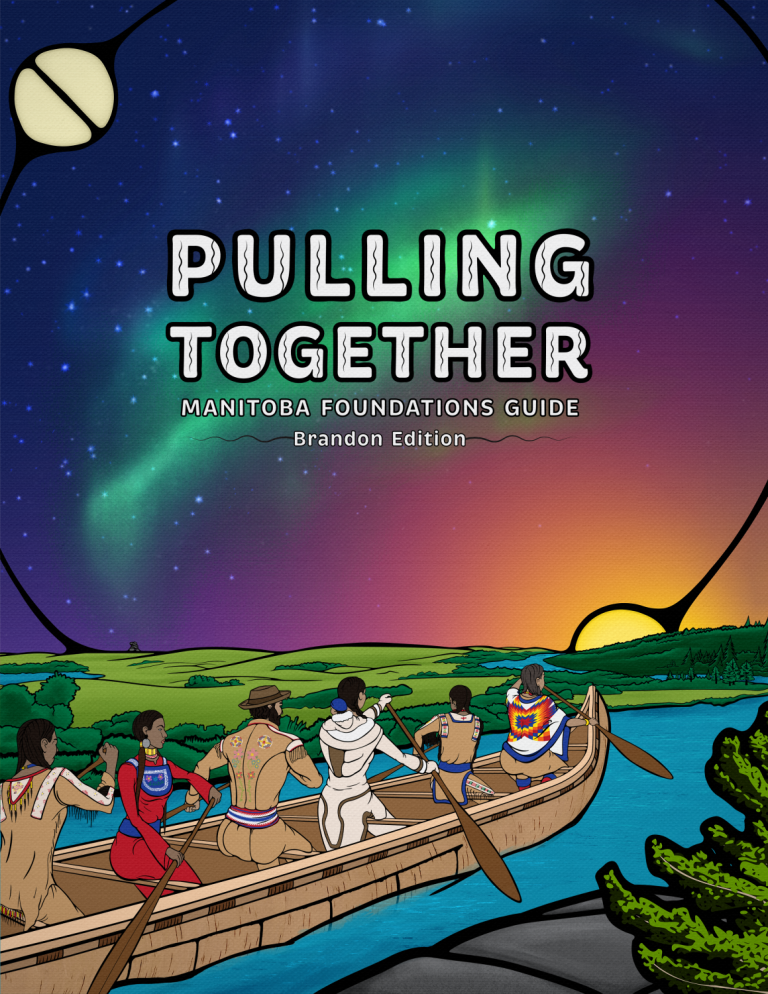
I love Pulling Together: Manitoba Foundations Guide (Brandon Edition) for a variety of reasons! It's such a great example of what collaboration can create, a fantastic demonstration of mixed-use licensing within an OER, and the artwork is stunning! Another reason I love Pulling Together so much is that it's a resource that is used well beyond the Academy. While it's used for trainings in universities and colleges, it has also been used in government agencies, nonprofit organizations, and other community organizations to increase our understanding of colonization and its impact.
Victoria Brame, Marketing & Communications Manager

As a first-generation college student, I remember the sticker shock of my first-semester textbook list. I gamified my way through the semesters that followed by relying on library reserves, sharing used copies with friends, finding what I could online, and buying new only when I had to. Years later as a magnet coordinator with early college high school students, I watched students put in the work to enter college as juniors and then still struggle with the cost of textbooks on top of rent, groceries, and basic self-care. I learned about open education during my MLS program while in that role, and it has been central to my work ever since.

As a former community college OER librarian who also supported dual-enrollment faculty, I always loved recommending MyOpenMath to math instructors looking to redesign their courses with both primary and ancillary OER. MyOpenMath is an open homework platform that supports a wide variety of open math textbooks, with coverage spanning arithmetic and pre-algebra through calculus and statistics. Instructors can seamlessly integrate MyOpenMath into in-person, hybrid, or online course formats, and students can even enroll in self-study courses. While there are so many great open textbooks available, open homework systems like these can help narrow the supplemental materials gap in open.
