

This post is one of the many capstone projects from the inaugural 2026 cohort of the Rebus Luminary Fellowship for Education Leaders. Each Luminary Fellow was invited to share a reflection with the broader community. Today, we hear from Greg Wilson, Assistant Dean for General Education at the College of Western Idaho .
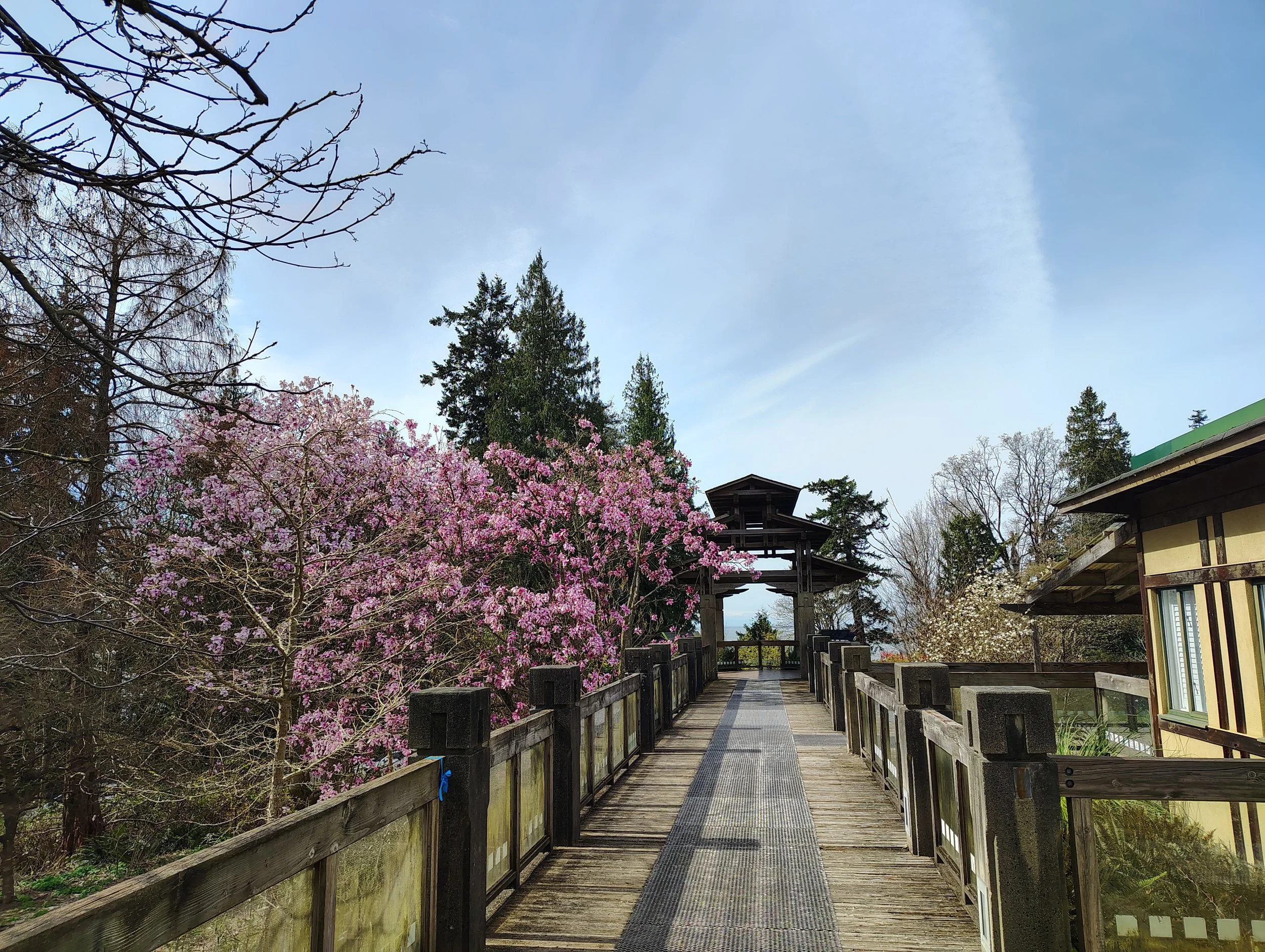
Cherry blossoms in Stanley Park on the day my foot was injured
I remember pretty well the day the Luminary Fellowship in-person meeting ended because that same evening, the night before I flew back home, I discovered a large wound on the bottom of my right foot where the callus just sloughed off.
The cause? Too much walking. And too much walking that I would do all over again. It was so worth it! Vancouver is a beautiful place, and it was my first (and most likely last) visit to that part of the world. That was the end of my formal time with the Luminary Fellowship, but the start of a longer journey.
What stands out to me (pun intended) almost six months later is that it is not the place of my ‘catastrophic’ foot injury, but the place where I learned more about the value of gathering and learning together toward a shared goal everyone has invested in. And that will always be my takeaway from this experience, even if it was accompanied by a little limp for a time.
“To put it another way, the principles we learned during the virtual and in-person meetings of the Luminary fellowship provided me with the tools to better walk through difficult situations, perhaps not without injury, but with a determined step.”
The fellowship itself was a well-designed path of three monthly virtual meetings with pre-work for us to complete and culminating in an in person gathering. In our online meetings, we got to know each other as participants and people to the point where when we finally did meet in person, we already knew a good bit about one another, our work and our hopes for the Fellowship. And I don’t think anyone will soon forget our first in-person meeting…a meal where we didn’t talk about ‘the agenda’ for the gathering, but just honored everyone’s presence around a shared table. All those decisions created a momentum to share and explore together what it means to lead in difficult times. For a more detailed description of the principles of the Liberatory Leadership that we explored, click here. I invite you to read on to find how I learned to make some of these lessons my own. Looking back, I see three pretty clear themes, all based on the principles of Liberatory Leadership, that emerged in my thinking:
Theme one: Learning to confront difficult situations with detachment
All of the attendees came along with their professional practices, their private practices and their public persona. Many shared about very difficult situations they had to confront and a lot of them were, to me, unimaginably difficult. However, in one way, they all had a similar, possible vantage point:
“When we get caught up in the minutiae of our work disagreements and email threads, the snubs both personal and public, the political upheaval we all experience in one way or another, and all the other situations we can’t control, we lose an opportunity to act and behave in conformity to our values and principles.”
Giving ourselves some mental distance from the people in the situation can help us to regain the agency to choose rightly in difficult situations, to choose with confidence, and maybe even joy. That choice may not solve our problem (and usually doesn’t), but it does help us sleep at night knowing that we chose according to our values and with kindness to others as a driving principle. Realizing that every person, even that ‘grumpy peer,’ has their own set of situations,struggles, and possible motivations for their behavior can help us remember to choose according to our beliefs and values, not according to the ‘details’ or logical solutions of the situation at hand.
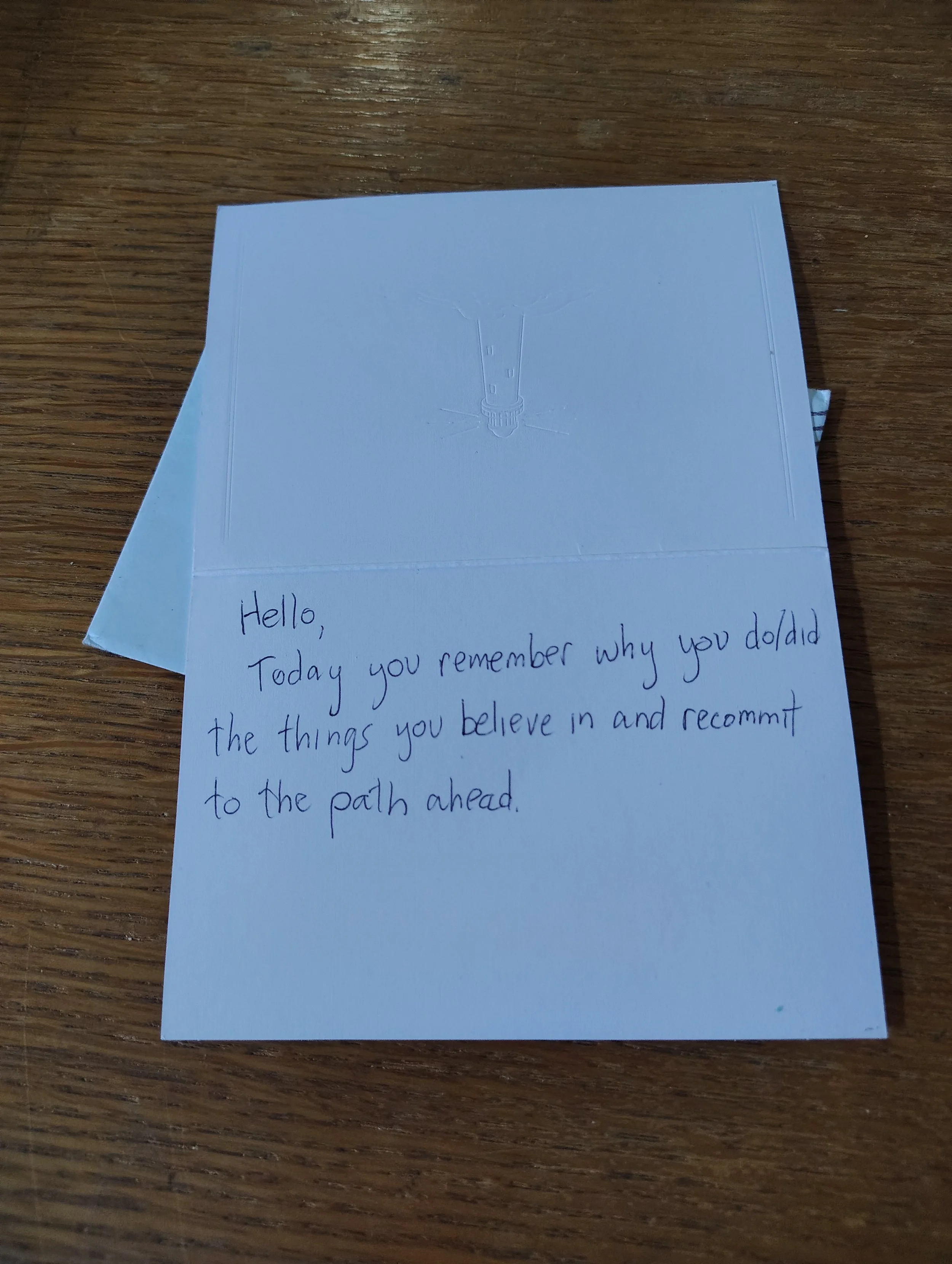
The note I sent myself and later received
To that end, about six weeks after the end of the in-person portion of the fellowship, I received a card in the mail. It was a card written (by me) to my future self, reminding me of something I felt was important. This is what I wrote: “Hello, Today you remember why you do/did the things you believe in and recommit to the path ahead.” To be honest, I had not always remembered that in the months that followed, so it was a good reminder that this is a work in progress. And believe it or not, it came at a time when I was helping respond to a particularly difficult situation at work. My past self was smarter than I thought!
Theme two: Valuing the time we control
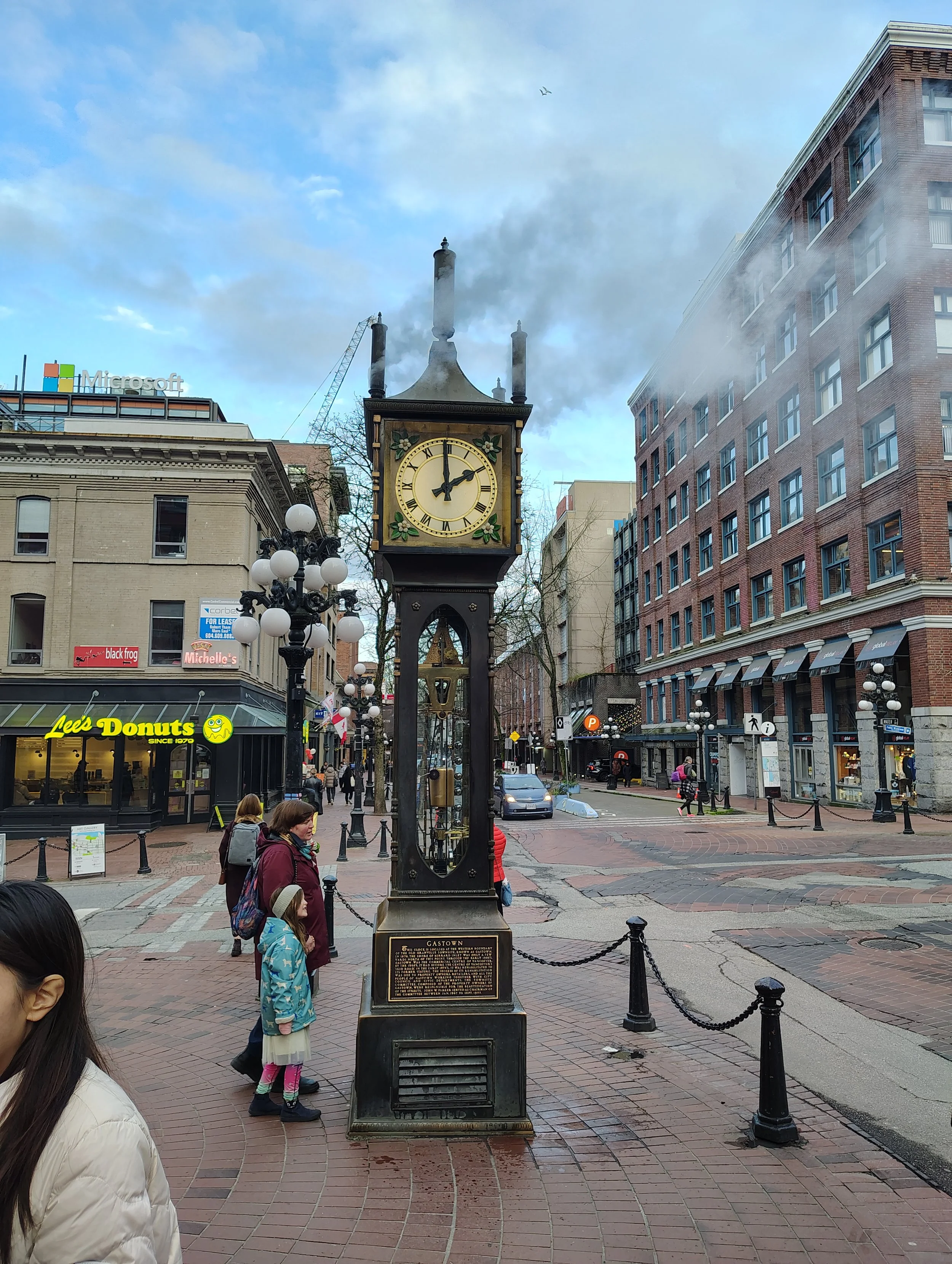
A visit to the Gastown steam clock
Another thing that struck me is that the organizers of the fellowship spent a lot of time (they must have!) creating a place where all of us felt welcomed, all of us felt we could share , and all of us spent pretty equal time contributing and listening to others (a rare thing in most meetings). This did not happen by accident, and Rebus was wonderful about valuing our time together both virtual and in person to ensure it was directed, that it supported the goals of the fellowship to support better leadership principles, and that it really did reach a level of personal leadership and character transformation for the attendees. I remember several of the wonderful discussions I had with my peers where the facilitators asked us to simply find a place to talk about difficult decisions we each needed or wanted to make. These discussions usually ended up being outside walking the harborside path of Vancouver, and the joining of the outside setting with our inner thoughts elevated our discussions and made them memorable and impactful.
Many of these designed elements were so natural that I didn’t recognize them as carefully planned until I reading a book that our Campus Success Committee invited us to read over the summer, The Art of Gathering: How We Meet and Why it Matters by Priya Parker.
“I was not familiar with this book at the time of the fellowship, but as I read it, I recognized how much work it must have taken to create such a purposeful environment that seemed at the same time natural, graceful, and effortless. ”
We should all value each other’s time in this way, and Rebus modelled that for us. Some of us, who are the makers of many meetings in our work life, could benefit from this approach.
Theme Three: Finding joy in small places
At one point in the gathering, we were asked to think about and imagine our future, good and bad, and how that affected us; some grew sad and others happy with that thought. All of us shared that with each other.
“For me, it reminded me of how much I love being with my first granddaughter, then just a year old, and seeing the small things of the world ‘for the first time’ through her eyes. Sometimes we let those moments, though wonderful, pass by quickly without recognizing or reflecting on their worth. When you look for joy, you will find it: in a walk, a leaf, or even a trip to the grocery store (if you look real hard!). And that is a good place to be. ”
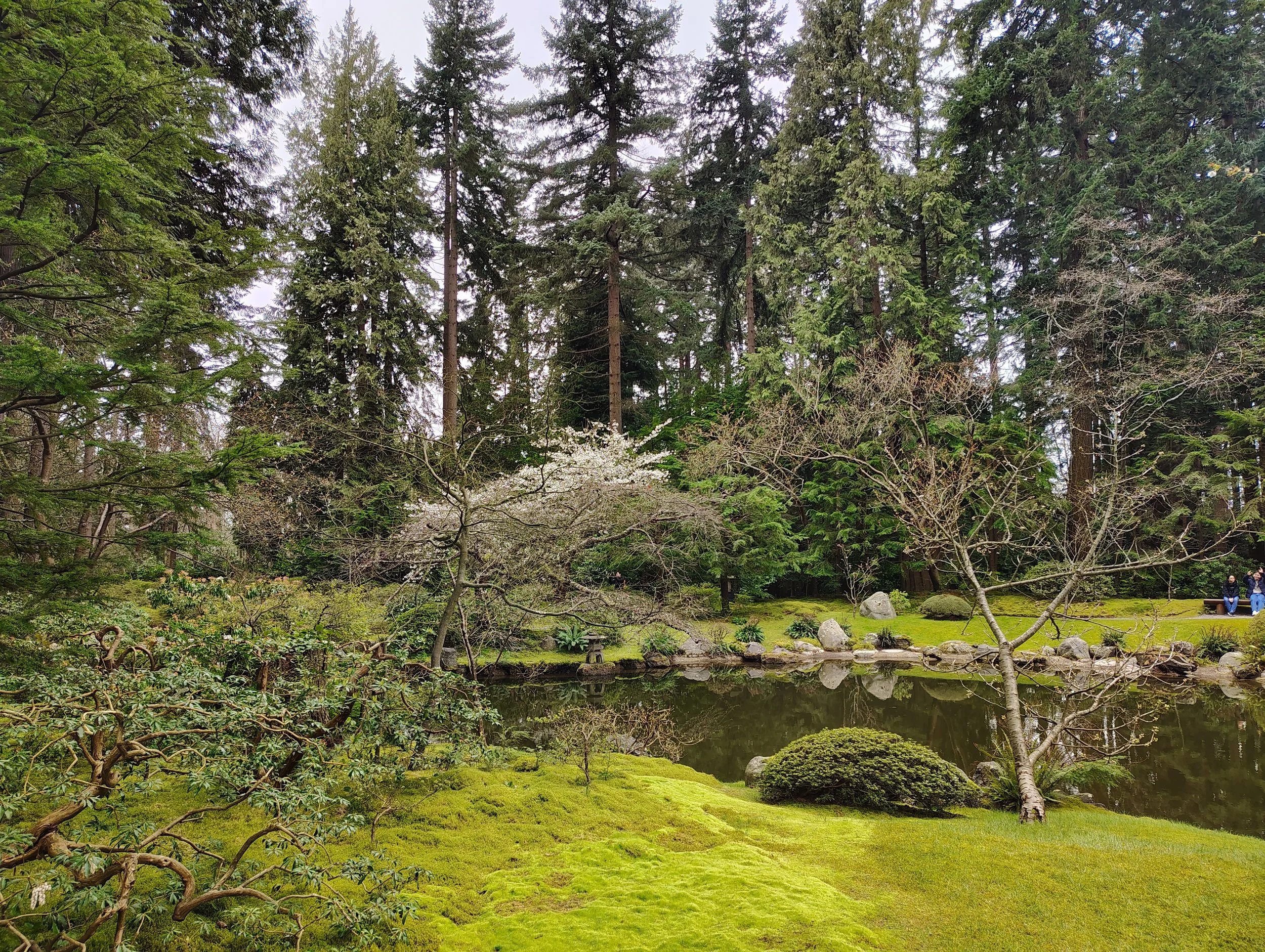
The Japanese garden at UBC
The tired suggestion of ‘being present’ doesn’t really capture this, but to me it is more like an inkling of the possibility of an overwhelming joy just out of reach, a joy at the gift of life and the recognition that there are things like love, justice and hope that are far greater than we are. Sometimes it seems that love and justice and hope are not present in our day and will never win, but in the end I do believe, along with Dr. King that ‘the arc of the moral universe is long, but it bends toward justice (and joy…my addition).’ Practicing this principle means being ready for each new day to be a different day than what went before, and being willing to find ways to mix joy with pain sometimes, which is not an easy task.
The things that remain
As I ponder the three-inch-long scar on the bottom of my right foot (and believe me that is not an easy feat for a somewhat arthritic old man), I think about the time it took to heal. It was not a quick process. But it did heal…finally…six months after it opened. That process mirrors the movements I learned through the Luminary Fellowship :
“First: wounds happen: learn to accept them with some detachment (our modern age has a lot to learn from the ancient Stoics);
Second: not all wounds heal quickly: always construct and value the time you have. Doing that will support healing;
Third: Be grateful each new day for a healed wound: remember to find joy in the small things like an evening walk without a foot brace, or the gift of health on those days when you have it, even when you are in the middle of a difficult work or personal situation. The trying times you have already gone through are a testament to your resiliency, and to the wonder of life. ”
In the end, I’m still not exactly sure how Rebus (which in Latin translates as ‘by’ or ‘through things’) managed to pull this off… how they pulled us together, how they then carefully pulled out of us some of our deepest reservations, hopes, and dreams for us to examine and learn from them, and how they then pushed us gently back into our everyday lives to try to do things a little differently. I’m not sure how they did it, but I’m very grateful to have experienced it. Maybe the ‘thing’ about Rebus is that they excel at using things such as OER, the Liberatory Leadership framework, the Luminary Fellowship, and all the other ‘things’ they do to create meaningful change in our world… through these things, they are making a big impact, and I can’t thank them enough.
About the Author
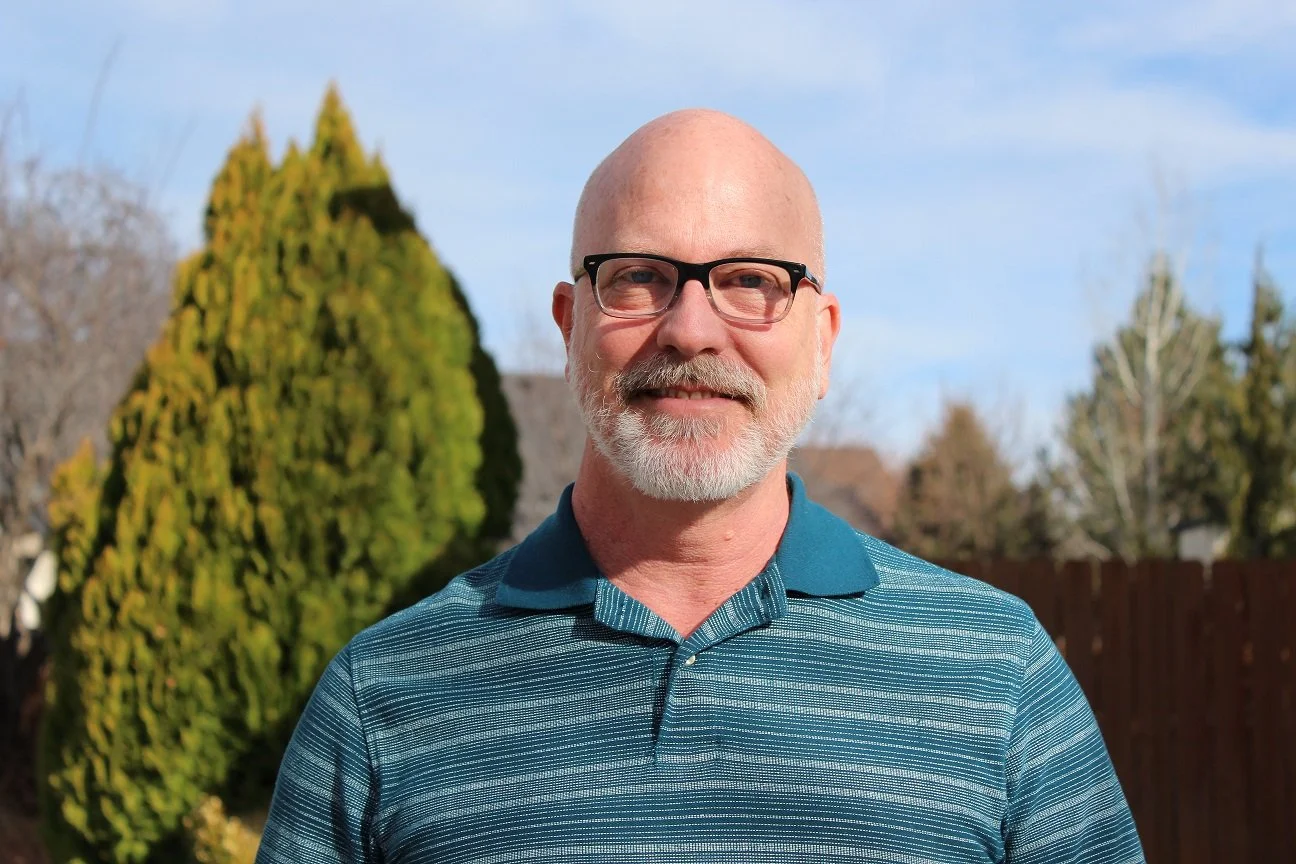
Greg Wilson serves as the Assistant Dean for General Education at the College of Western Idaho located in Nampa, Idaho. He has a long career in higher education both here and overseas, and is passionate about reducing barriers for students including overseeing the OER work at the college. Father of two and grandfather of three, Greg enjoys time with his family including his wife, kids and grandkids, 3 pugs and a hairless cat named Leena (pretty ballerina).
Walking Wounded © 2026 by Greg Wilson is licensed under CC BY-NC-ND 4.0