
The Other Side of Connection: On Being Seen, Heard, and Human
This post is one the of many capstone projects from the inaugural 2026 cohort of the Rebus Luminary Fellowship for Education Leaders. Each Luminary Fellow was invited to share a reflection with the broader community. Today, we hear from Heather Blicher, Director of the Community College Consortium for OER (CCCOER) with Open Education Global.

I have a light switch inside my head.
Not a real one, of course. But for as long as I can remember, when I need to be "on" professionally, something shifts. I step into whatever role is needed. I facilitate, problem-solve, make decisions, and keep things moving.
It's not something I consciously decide to do. It happens automatically. Whether it’s running large-scale teen programming at a public library, breaking up a fight in the parking lot, teaching an information literacy session, or coordinating volunteers and committees, it's become part of who I am. I've done this for so long that I rarely stop to think about it. It's simply how I've learned to navigate the various parts of my positions.
During the Rebus Luminary Fellowship, something unexpected happened. I realized I wasn't feeling the same need to be "on."
The Leader I Am
I've spent more than two decades working in education, much of that time in leadership roles, both informal and formal. Those experiences shaped me in ways I'm proud of, teaching me to be resourceful, adaptable, independent, and responsive. They also taught me to take responsibility - a lot of it.
Working in libraries, particularly in public-facing roles, meant that I never quite knew what the day would bring. When not implementing programs or teaching, I was responding to a crisis, managing a difficult situation, or figuring out how to solve a problem I’d never encountered before. I learned to get things done. And sometimes, I learned that if I didn't step in, no one else would. As Bryce Smedley (2026), a fellow Rebus alumnus, writes, “Higher education often teaches educators to survive alone. Work harder. Produce more. Absorb more. Endure more. Keep your head down and outlast whatever comes next.” I'm grateful for what those experiences taught me, but I'm also beginning to recognize how deeply they conditioned me.
“How do you untrain your brain after decades of automatically assuming responsibility? I still struggle with that question.”
I work in a field that aligns deeply with my values. I believe in equitable access to education, in sharing knowledge, and in the power of community. I love what I do, and perhaps that's part of what makes finding balance so difficult.
Librarian and scholar Fobazi Ettarh (2018) introduced the concept of vocational awe, examining how librarianship's identity as a noble calling can obscure problematic expectations and working conditions. Her work gave language to something I had experienced but hadn't fully understood. I've thought about how similar these expectations are in Open Education.
“When we believe so deeply in the importance of our work, how do we recognize when that commitment comes at a personal cost? ”
There is always another opportunity, another person to connect with, another program to develop, another need that deserves attention. And I care. Deeply.
“But I’m beginning to understand that if I want to continue doing work that matters to me, I also need to recognize what I need to sustain myself. ”
Finding the Words
When I joined the Rebus Luminary Fellowship, a three-month experience bringing together postsecondary education leaders from Canada and the U.S. to explore more authentic and sustainable approaches to leadership, I expected to learn from others and discover new ways of approaching my work. And I did. But what surprised me most was how much the fellowship invited me to look inward.
The Liberatory Leadership Framework (2025) challenged me to consider leadership through care, connection, authenticity, and our relationships with one another. These ideas resonated with me and challenged me to consider whether I was extending the same understanding and care to myself that I tried to offer others. For example, I've always been a thinker. Sometimes I need time to turn an idea over in my head, examine it from different perspectives, and decide what I think before responding. That can be challenging in professional environments where immediate responses are expected. By the time I've worked through my thoughts and am ready to contribute, the conversation may have moved on. And then there are times when I know exactly what I think and respond immediately. That, too, can be challenging. My directness isn't always received as I intend. I've spent years trying to navigate how I naturally communicate and how others expect me to.
I knew that I sometimes adjusted how I presented myself, but I didn't necessarily have the language to describe what I was doing.
“During the fellowship, I began thinking about masking. The switch I’d been flipping for so many years suddenly had another meaning. I was recognizing the energy involved in adapting myself to what I believed others expected of me.”
And while I had always been aware of the effort, I hadn't fully considered its cost. As Allison Buckley, another Rebus alum, writes, “Don’t allow anyone to create a narrative that perpetuates a myth that your authentic, whole self is not good enough for the spaces you inhabit” (2026). What was different about the fellowship wasn't that I learned a new way to present myself. It was that, for once, I felt comfortable enough not to worry so much about how I was being perceived. I could be myself.
Being Seen
I enjoyed the smaller group conversations and one-on-one connections throughout the fellowship. Those opportunities to get to know people, exchange ideas, and discover shared experiences were meaningful. But two moments during our in-person gathering have stayed with me. One came when another fellow described me, in front of the group, as a connector. It may sound like a small thing. But it wasn't small to me.
Connecting people is something I do naturally. I introduce people who might benefit from knowing one another. I notice work happening outside the usual circles. I follow conversations, make introductions, and create opportunities for people to share their experiences and learn from one another. I don't always think about it as a leadership strength. It's just what I do.
In a recent lightning talk, I reflected on my approach to developing programming for CCCOER. I described how much of the work happens before and after a webinar: the conversations, introductions, emails, and relationships that eventually bring people together. But much of that relationship-building work is invisible.
People experience the connections without necessarily seeing the time, thought, and care that helped make them possible. So when another fellow called me a connector, something shifted. Someone had noticed. And in that moment, I began to recognize something in myself that I hadn't fully appreciated before.
The second moment was more personal. During a group conversation, I allowed myself to be vulnerable on a topic that I’d been chastised in previous places for bringing up. And I felt heard. Not simply listened to, but genuinely heard and understood. My voice broke. I wasn't trying to be the capable person with the answers, or the leader who could help someone else work through a problem. I was simply a person sharing something difficult. And there was room for that.
I've thought about both of those moments quite a bit since the fellowship. One helped me recognize something about myself that I'd taken for granted. The other gave me space to be vulnerable and feel supported. Both meant more to me than I can easily explain.
“Perhaps what made them so meaningful was that I spend so much of my professional life creating opportunities for others to connect, belong, and feel heard. And here I was, experiencing that same kind of care for myself.”
Connections That Continue
One of the things I value most about the fellowship is that the relationships haven't ended.
I've stayed in touch with some of the Fellows, continuing to support one another asynchronously. Sometimes it's a quick note of encouragement. Sometimes it's a meme. Sometimes it's a simple reminder that we are all human and deserve rest. And that's enough. There's something meaningful about the simplicity of it.
We don't always need to explain what we're experiencing. We don't need to schedule a meeting or find time for a long conversation. We understand one another and offer support in whatever small ways we can. It's reciprocal. It's genuine. And it doesn't require either of us to be professionally "on."
For someone who spends so much time bringing people together, I've discovered how much it means to have relationships in which I don't feel responsible for making everything happen. I've been thinking about reciprocity, one of the values Rebus emphasizes throughout the fellowship. It's a word I've understood and believed in for years. But I wonder how often I've really allowed myself to experience it.
I know how to offer support. I know how to bring people together, make introductions, and create opportunities for others. Receiving that same care hasn't always come as naturally. And perhaps that's something I'm learning through these relationships.
“Connection doesn’t have to depend on one person doing all the work. Care can move in both directions, sometimes in the simplest and most unexpected ways.”
Still Learning
I wish I could say that the fellowship helped me figure out how to stop overextending myself, that I've mastered work-life balance, or that I've learned to stop flipping that switch. I haven't.
I still struggle to separate my work from my life. I still find myself taking on responsibilities that perhaps don't always need to be mine. And I still have days when I'm exhausted by the expectations I place on myself or that are expected of me. But I'm more aware of those patterns now. I'm also more aware of what it feels like to be part of a community where I don't have to work so hard at simply being myself.
“I love my work. I want to continue doing it, and I want to keep bringing people together. But I also know that I need to make room for myself along the way. I’ve spent much of my professional life learning how to show up for others. I’m learning what it means to let others show up for me.”
Sometimes in a room full of people.
Sometimes in a conversation that brings out emotion.
And sometimes, wonderfully and simply, through a quick note of encouragement or appreciation.
References
Buckley, A. (2026). It’s Not Ok To Have a Volkswagen Parked On Your Chest.
Ettarh, F. (2018). Vocational Awe and Librarianship: The Lies We Tell Ourselves. In the Library with the Lead Pipe.
Leadership Learning Community. (2025). Liberatory Leadership Framework.
Smedley, B. (2026). What the Fellowship Interrupted.
The Rebus Foundation. (2026). Luminary Fellowship for Education Leaders: Shared Values and Outcomes.
About the Author
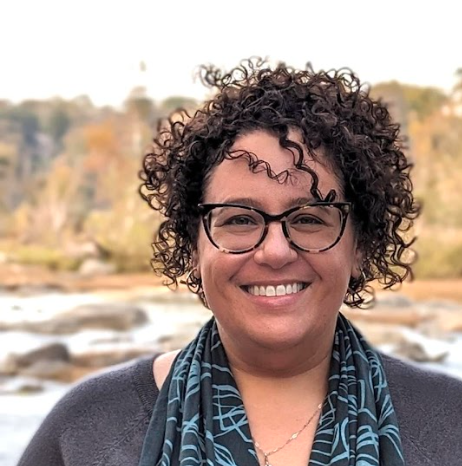
Heather Blicher is the Director of the Community College Consortium for OER (CCCOER) with Open Education Global. Her background in libraries and higher education spans programming, online learning, Open Education, and accessibility. She believes in the power of relationships, collaboration, and community to create meaningful change.
The Other Side of Connection: On Being Seen, Heard, and Human © 2026 by Heather Blicher is licensed under CC BY-NC-ND 4.0