

This post is the one of many capstone projects from the inaugural 2026 cohort of the Rebus Luminary Fellowship for Education Leaders. Each Luminary Fellow was invited to share a reflection with the broader community. Today, we hear from London McBride, Director of Law Enforcement and Adult Learning at the Museum of Tolerance.
One of the things I appreciate most about the Rebus Luminary Fellowship is that it gave me permission to lead differently. Throughout my career in law enforcement and now as the Director of Law Enforcement and Adult Learning at the Museum of Tolerance, I have spent years working within systems that often equate leadership with hierarchy, control, and having all the answers.
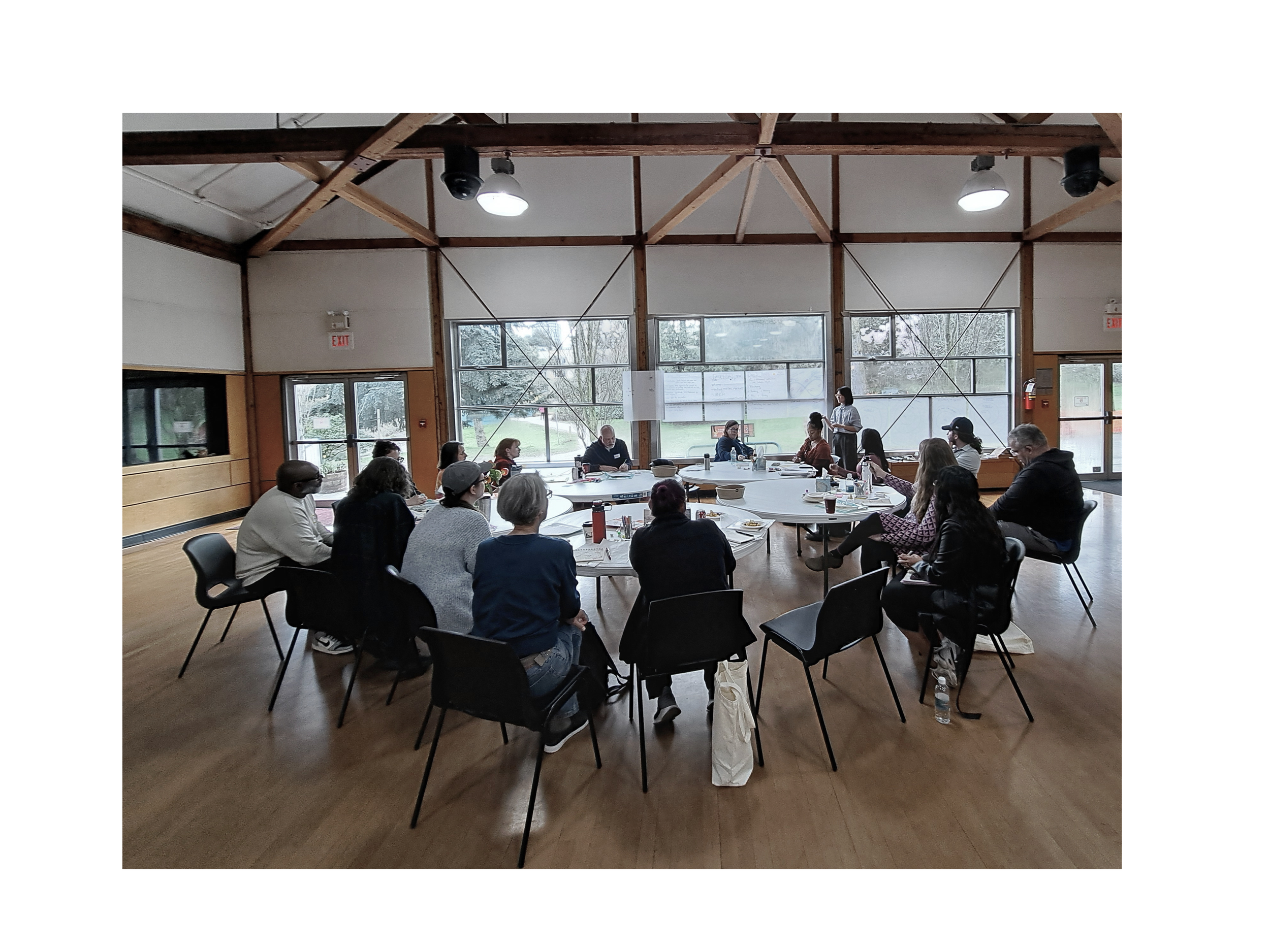
Having rich conversations with other Luminary Fellows in Vancouver.
The expectation has always been that the leader is supposed to be the strongest voice in the room. What this fellowship reminded me is that the strongest leader isn’t necessarily the loudest one. Sometimes the strongest leader is the one willing to make room for everyone else’s voice.
As I stepped into my role at the Museum of Tolerance, in February of 2026, I knew I didn’t want to recreate the same leadership model I had experienced throughout much of my career. We are an institution whose mission is to eliminate hate and build a more just and compassionate society. It would be contradictory if we taught collaboration, empathy, and belonging in our classrooms while leading our own teams through fear, hierarchy, or ego. The fellowship challenged me to ask whether my leadership reflected the world I hoped our learners would help create.
“It would be contradictory if we taught collaboration, empathy, and belonging in our classrooms while leading our own teams through fear, hierarchy, or ego.”
One of the biggest changes I’ve made is intentionally creating space for my team. Instead of walking into meetings believing I need to have every answer, I now walk in believing someone else may have a better one. That mindset has changed everything.
Whether we’re discussing curriculum, facilitator development, or the future of our department, everyone has a seat at the table. That doesn’t mean every idea becomes the direction we take, but every voice deserves to be heard. I’ve learned that people don’t simply commit to a vision because they’re told to. They commit because they helped build it.
That has required me to become comfortable with vulnerability. Traditional leadership often teaches us to protect our authority. The fellowship taught me that authentic leadership protects relationships instead. There have been moments when my team has challenged my thinking, pointed out blind spots, or offered solutions I hadn’t considered. Rather than viewing those moments as challenges to my authority, I see them as evidence that trust exists. That’s the kind of culture I want to build.
I’m also intentional about allowing my team to hold me accountable. Accountability should never flow in only one direction. If I expect my staff to receive feedback with humility, I have to model that same humility myself. I’ve told my team that if they see something I don’t see, I want to hear it. If my communication isn’t clear, tell me. If there’s a better way to accomplish our mission, let’s have that conversation. Leadership isn’t diminished by accountability, it is strengthened by it.
“Perhaps the greatest lesson I’ve taken from the fellowship is found in its core principles, which states “compassion and courage belong together”. ”
Perhaps the greatest lesson I’ve taken from the fellowship is found in its core principles, which states “compassion and courage belong together”. Too often we separate the two, believing compassion makes leaders weak or that courage requires toughness. My experience has been the opposite. It takes courage to lead with compassion. It takes courage to slow down long enough to hear someone’s perspective before making a decision. It takes courage to admit when you don’t know something. It takes courage to trust people enough to share ownership instead of controlling every outcome.
I want to lead in a way that gives people permission to bring their full selves to the work.
Those lessons have directly influenced the work we’re doing at the Museum of Tolerance. My team and I are reimagining what anti-hate education can look like. James Baldwin said, “The paradox of education is precisely this, that as one begins to become conscious one begins to examine the society in which he is being educated”.
Rather than creating curricula from a single perspective, we’re building it collaboratively. We bring together different professional experiences, lived experiences, and educational backgrounds because hate doesn’t exist in one community or one profession. Neither should the solutions.
We’re developing curricula that speaks to law enforcement, educators, community leaders, and organizations across multiple platforms because our goal isn’t simply to tell people about history. Our goal is to help them recognize how bias, division, fear, and dehumanization continue to operate today, and more importantly, how folks can interrupt those patterns within their own organizations and communities.
What excites me most is that this work no longer feels like work. It feels like our community. Everyone has become invested in creating learning experiences that are practical, courageous, historically grounded, and deeply human. That kind of ownership only happens when people believe in one another..
“I want to lead in a way that gives people permission to bring their full selves to the work, to challenge ideas respectfully, to innovate courageously, and to know that they belong.”
As I continue to grow, I don’t want to be remembered as someone who had all the answers. I want to be remembered as someone who made space for others to discover theirs. I want to lead in a way that gives people permission to bring their full selves to the work, to challenge ideas respectfully, to innovate courageously, and to know that they belong.
About the Author
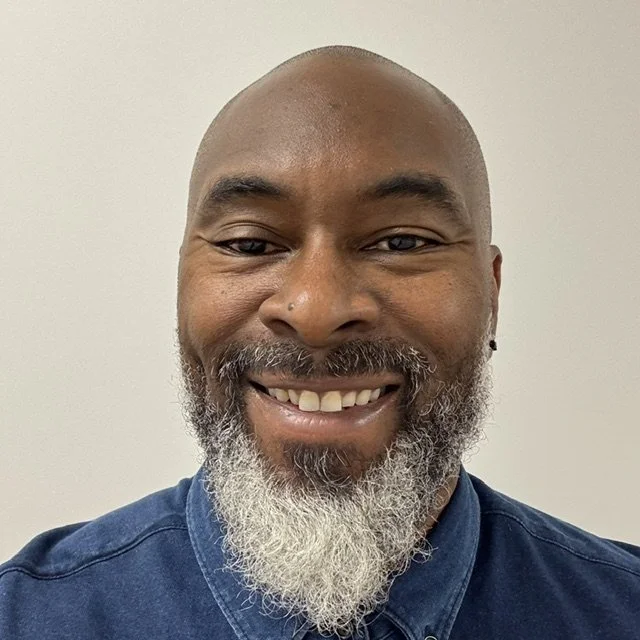
London McBride is the Director of Law Enforcement and Adult Learning at the Museum of Tolerance, an educator, and a leadership consultant with more than 18 years of experience spanning law enforcement, public safety, higher education, and community engagement.
His work focuses on developing ethical leaders, strengthening community relationships, and creating innovative programs that advance justice, accountability, and human dignity.
As the founder of Police Against Racism and a sought-after speaker and facilitator, London is committed to helping organizations build cultures of trust, courage, and lasting impact while pursuing victory for humanity.
When Work No Longer Feels Like Work © 2026 by London McBride is licensed under CC BY-NC-ND 4.0